


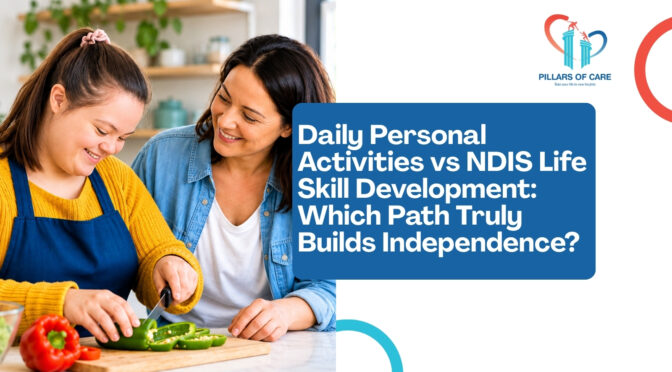
Choosing the right support model under the National Disability Insurance Scheme (NDIS) determines whether you stay dependent on assistance or steadily build practical autonomy.
Many Sydney participants assume that booking everyday assistance automatically helps them learn to do things on their own. In practice, receiving assistance and developing self-reliance come from two distinct funding streams designed to achieve entirely different outcomes.
Daily personal activities provide immediate, hands-on physical support for everyday tasks like showering, dressing, and mobility under your Core budget.
In contrast, Life skill development focuses on structured coaching and capacity building to teach you how to complete tasks independently over time, funded via Capacity Building.
Core Care vs Capacity Building: Understanding the Foundational Split
The core difference between everyday care and personal development comes down to immediate relief versus long-term capability.
Daily Personal Activities Sydney fall within your Core Supports budget, specifically under Assistance with Daily Life. This category ensures your immediate physical health, hygiene, and daily nutrition needs are safely met right now.
NDIS Life Skill Development sits inside your Capacity Building budget under Improved Daily Living. This funding aims to systematically reduce your reliance on external care by helping you acquire new household, communication, and decision-making habits.
| Comparison Area | Daily Personal Activities (Core) | Life Skill Development (Capacity Building) |
| Primary Focus | Immediate task completion & comfort | Learning, confidence, and self-reliance |
| Support Method | A support worker does the task for/with you | A mentor guides, coaches, and prompts you |
| NDIS Funding | Core Supports (Assistance with Daily Life) | Capacity Building (Improved Daily Living) |
| Long-Term Goal | Maintain daily safety, hygiene, and dignity | Reduce reliance on paid supports over time |
What Does Hands-On Everyday Support Actually Cover?
Direct personal assistance is designed to keep your home running smoothly when physical, cognitive, or neurological conditions make specific routines impossible to handle alone.
A dedicated Disability Support Worker Sydney assists with routines such as morning transfers, showering, grooming, bowel care, and meal consumption. These services prevent hospital admissions, manage hygiene risks, and support personal comfort across your own living environment.
A common mistake in home support plans is allowing routine assistance to become purely passive. Quality providers ensure support workers respect your personal boundaries, listen to your choices, and allow you to lead your routine at your own pace.
How Structured Skill Acquisition Creates Lasting Autonomy
Skill coaching shifts the daily question from “Who will do this for me?” to “What part of this task can I master today?”
Through capacity building, your support team breaks down complex routines into achievable, step-by-step milestones. This includes managing weekly grocery budgets, using the Opal card system across the Sydney rail network, preparing healthy meals from scratch, and handling household bills independently.
Every support session follows a structured learning plan with clear milestones. As you gain mastery, your support hours can gradually shift from direct supervision toward community engagement, employment readiness, or personal interests.
Side-by-Side: Doing For vs Doing With in Real Scenarios
The clearest way to see the distinction between these two models is in how support workers deliver assistance during routine household tasks:
- Weekly Meal Preparation: Direct personal support involves a carer batch-cooking five days of meals and cleaning the kitchen. Skill training involves a mentor helping you write a grocery list, compare store prices, chop vegetables safely, and master microwave cooking times.
- Public Transport Journeys: Personal care provides transport by driving you directly to appointments. Skill development teaches you how to check platform departure boards at Central Station, top up your transport balance, and resolve transfer delays independently.
- Household Budgeting: Standard support involves someone handling your payments on your behalf. Skill acquisition walks you through reading power bills, setting aside grocery funds, and using digital banking apps safely.
How to Balance Both Support Types for the Best Outcomes
You do not have to choose strictly between direct personal support and skill development; the most effective approach combines both.
Field experience shows that participants make the fastest progress when daily personal support protects their energy for structured learning sessions. For instance, having help with morning showering prevents physical fatigue, leaving you alert and ready for a two-hour afternoon budgeting or cooking lesson.
To make this balance work, your provider must ensure clear communication between your support teams. The person helping you prepare dinner should understand the slicing, measuring, or kitchen habits your capacity-building mentor introduced earlier in the week.
Working with a registered provider like Pillars of Care gives you access to qualified carers and mentors who adhere strictly to the governance and safety rules established by the NDIS Quality and Safeguards Commission.
Frequently Asked Questions
Can I switch Core funding into Capacity Building automatically?
No. Core budgets offer flexible spending across everyday support categories, but Capacity Building funds are allocated to specific goal-oriented support categories.
How do I prove my need for life skills coaching to the NDIA?
Submit an Occupational Therapy Functional Capacity Assessment outlining specific skill deficits and clear developmental goals for your upcoming plan review.
Will building my independence reduce my overall NDIS funding?
As personal skills increase, your direct Core care hours may adjust down, but funding shifts toward social, work, and community goals.
Do support workers in Sydney charge travel time for skill sessions?
Providers can claim agreed provider travel capped by standard NDIS pricing limits when traveling directly to deliver your community supports.
Can my family member provide paid skill training at home?
The NDIS strictly limits paying family members to avoid conflicts of interest, requiring external qualified mentors for formal capacity building.
Take the Next Step in Your Journey
Ready to balance essential daily personal care with meaningful skill development across Sydney? Contact our friendly team today to build a personalized support roster tailored to your individual goals and budget.
Phone: 1800 93 11 55
Email: admin@pillarsofcare.com.au
Address: Sydney, NSW (Serving Greater Sydney & Regional Communities)
Website: https://pillarsofcare.com.au/


