Category Archives: NDIS Service

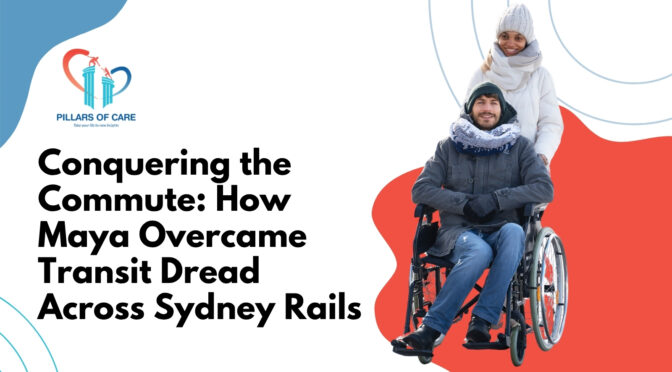
Conquering the Commute: How Maya Overcame Transit Dread Across Sydney Rails

Six months ago, the mere mention of catching a train triggered overwhelming distress for Maya, a 20-year-old autistic participant living in Ashfield.

Piercing platform announcements, dense crowds during the morning rush, and unexpected line delays left her feeling exhausted before she even arrived at her destination. Her world had gradually shrunk to the four walls of her family home.

Maya’s family wanted to help her attend a weekly digital design course in Surry Hills, but balancing work commutes with driving her across the city proved unsustainable.

NDIS Travel and Transport Sydney provides structured funding and one-on-one support worker assistance to help participants travel safely through their communities. It covers direct transport, vehicle travel, and independent transit coaching, ensuring individuals reach social activities, education, and appointments without experiencing sensory burnout.

The Hurdle: Navigating Sensory Overload Across Sydney Interchanges

Public transport presents immense sensory hurdles for autistic young adults seeking genuine community connection.

Maya wanted the freedom to explore the city independently, yet high-traffic junctions like Strathfield and Central felt completely unmanageable. Flashing indicator boards, metallic track screeching, and tightly packed carriages caused sensory overload within minutes.

Her previous provider treated transit as a basic taxi service, simply driving her from point A to point B without building any personal confidence. That approach left Maya entirely dependent on others whenever she stepped outside.

Finding dedicated Autism Support Services Sydney required more than a driver; it demanded a team capable of understanding sensory triggers and co-designing a supportive, gradual path forward.

The Strategy: Designing a Sensory-Safe Travel Pathway

Maya’s family reached out to Pillars of Care to structure a comprehensive community access plan.

Instead of forcing sudden exposure to busy trains, her support team separated her immediate physical transit needs from long-term skill acquisition. The team conducted a comprehensive sensory mapping session, identifying Maya’s auditory triggers, preferred seating locations, and calming routines.

Her plan utilised Assistance with Travel and Transport alongside Core community access funding to ensure every trip remained safe, structured, and goal-focused.

All provider billing and transport allowances were aligned directly with the standards published in the official NDIS Pricing Arrangements.

The Breakthrough: Stepping Out with Guided Desensitisation

Maya’s support worker began with quiet, low-pressure steps: visiting their local station during quiet mid-morning hours just to sit on a bench with a warm tea.

They reviewed accessible platform guides and station floor plans from Transport for NSW Accessibility to find the quietest waiting areas and step-free access routes. Her worker carried a sensory recovery kit containing noise-cancelling headphones, visual destination cards, and a tactile grounding stone.

Over the next eight weeks, they advanced from short one-stop rides to managing transfers during moderate commuter hours. When trackwork disrupted their train line on week six, Maya avoided a panic attack because her worker had already practiced a visual backup route using the light rail.

The Outcome: Sustainable Independence and Community Belonging

Today, Maya travels independently to her Surry Hills design workshop every Tuesday and Thursday morning.

She carries her Opal card, wears her headphones comfortably, and navigates platform switches with calm confidence. Her family enjoys peace of mind, knowing she possesses the practical skills to solve unexpected transit hiccups.

Most rewarding of all, reliable travel opened the door to sustained Social and Community Participation, enabling Maya to build genuine friendships, collaborate on creative projects, and actively shape her own future.

Frequently Asked Questions

Can my NDIS plan cover support worker vehicle mileage?

Yes. Providers can bill an agreed per-kilometre rate when a worker transports you in their vehicle during an approved community session.

What is the difference between transport allowance and activity travel?

Allowances are periodic direct participant payments, while activity-based transport funds a support worker to accompany, assist, or drive you.

Can travel training be funded under Capacity Building?

Yes. Capacity Building covers targeted travel training, helping you learn train routes, use transit apps, and navigate local networks independently.

How do support workers manage sensory overload during transit?

Workers use pre-planned low-sensory routes, noise-reduction tools, grounding exercises, and quiet station exits to de-escalate anxiety quickly and safely.

Do I need a formal diagnosis to receive travel support?

Yes. An approved NDIS plan with documented functional mobility, psychosocial, or cognitive barriers is required to access funded travel assistance.

Plan Your Travel Support With Confidence

Ready to help yourself or your loved one travel across Sydney without fear or sensory exhaustion? Get in touch with our compassionate team today to map out a personalized community travel plan.

Phone: 1800 93 11 55

Email: admin@pillarsofcare.com.au 

Address: Sydney, NSW (Servicing Greater Sydney & Regional Communities)

Website: https://pillarsofcare.com.au/
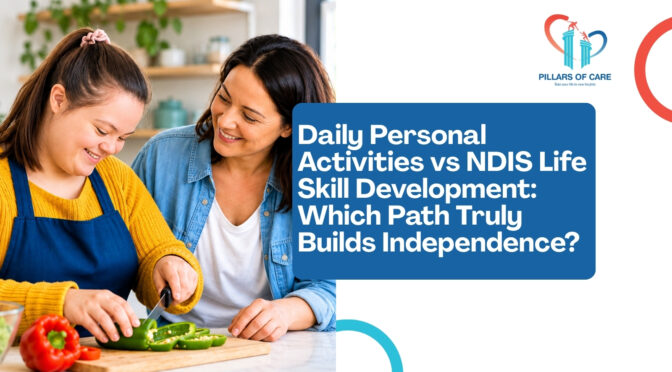
Daily Personal Activities vs NDIS Life Skill Development: Which Path Truly Builds Independence?

Choosing the right support model under the National Disability Insurance Scheme (NDIS) determines whether you stay dependent on assistance or steadily build practical autonomy.

Many Sydney participants assume that booking everyday assistance automatically helps them learn to do things on their own. In practice, receiving assistance and developing self-reliance come from two distinct funding streams designed to achieve entirely different outcomes.

Daily personal activities provide immediate, hands-on physical support for everyday    tasks like showering, dressing, and mobility under your Core budget. 

In contrast, Life skill development focuses on structured coaching and capacity building to teach   you how to complete tasks independently over time, funded via Capacity Building.     


Core Care vs Capacity Building: Understanding the Foundational Split

The core difference between everyday care and personal development comes down to immediate relief versus long-term capability.

Daily Personal Activities Sydney fall within your Core Supports budget, specifically under Assistance with Daily Life. This category ensures your immediate physical health, hygiene, and daily nutrition needs are safely met right now.

NDIS Life Skill Development sits inside your Capacity Building budget under Improved Daily Living. This funding aims to systematically reduce your reliance on external care by helping you acquire new household, communication, and decision-making habits.

Comparison Area Daily Personal Activities (Core) Life Skill Development (Capacity Building)
Primary Focus Immediate task completion & comfort Learning, confidence, and self-reliance
Support Method A support worker does the task for/with you A mentor guides, coaches, and prompts you
NDIS Funding Core Supports (Assistance with Daily Life) Capacity Building (Improved Daily Living)
Long-Term Goal Maintain daily safety, hygiene, and dignity Reduce reliance on paid supports over time

What Does Hands-On Everyday Support Actually Cover?

Direct personal assistance is designed to keep your home running smoothly when physical, cognitive, or neurological conditions make specific routines impossible to handle alone.

A dedicated Disability Support Worker Sydney assists with routines such as morning transfers, showering, grooming, bowel care, and meal consumption. These services prevent hospital admissions, manage hygiene risks, and support personal comfort across your own living environment.

A common mistake in home support plans is allowing routine assistance to become purely passive. Quality providers ensure support workers respect your personal boundaries, listen to your choices, and allow you to lead your routine at your own pace.

How Structured Skill Acquisition Creates Lasting Autonomy

Skill coaching shifts the daily question from “Who will do this for me?” to “What part of this task can I master today?”

Through capacity building, your support team breaks down complex routines into achievable, step-by-step milestones. This includes managing weekly grocery budgets, using the Opal card system across the Sydney rail network, preparing healthy meals from scratch, and handling household bills independently.

Every support session follows a structured learning plan with clear milestones. As you gain mastery, your support hours can gradually shift from direct supervision toward community engagement, employment readiness, or personal interests.

Side-by-Side: Doing For vs Doing With in Real Scenarios

The clearest way to see the distinction between these two models is in how support workers deliver assistance during routine household tasks:

  • Weekly Meal Preparation: Direct personal support involves a carer batch-cooking five days of meals and cleaning the kitchen. Skill training involves a mentor helping you write a grocery list, compare store prices, chop vegetables safely, and master microwave cooking times.
  • Public Transport Journeys: Personal care provides transport by driving you directly to appointments. Skill development teaches you how to check platform departure boards at Central Station, top up your transport balance, and resolve transfer delays independently.
  • Household Budgeting: Standard support involves someone handling your payments on your behalf. Skill acquisition walks you through reading power bills, setting aside grocery funds, and using digital banking apps safely.


How to Balance Both Support Types for the Best Outcomes

You do not have to choose strictly between direct personal support and skill development; the most effective approach combines both.

Field experience shows that participants make the fastest progress when daily personal support protects their energy for structured learning sessions. For instance, having help with morning showering prevents physical fatigue, leaving you alert and ready for a two-hour afternoon budgeting or cooking lesson.

To make this balance work, your provider must ensure clear communication between your support teams. The person helping you prepare dinner should understand the slicing, measuring, or kitchen habits your capacity-building mentor introduced earlier in the week.

Working with a registered provider like Pillars of Care gives you access to qualified carers and mentors who adhere strictly to the governance and safety rules established by the NDIS Quality and Safeguards Commission.

Frequently Asked Questions

Can I switch Core funding into Capacity Building automatically?

No. Core budgets offer flexible spending across everyday support categories, but Capacity Building funds are allocated to specific goal-oriented support categories.

How do I prove my need for life skills coaching to the NDIA?

Submit an Occupational Therapy Functional Capacity Assessment outlining specific skill deficits and clear developmental goals for your upcoming plan review.

Will building my independence reduce my overall NDIS funding?

As personal skills increase, your direct Core care hours may adjust down, but funding shifts toward social, work, and community goals.

Do support workers in Sydney charge travel time for skill sessions?

Providers can claim agreed provider travel capped by standard NDIS pricing limits when traveling directly to deliver your community supports.

Can my family member provide paid skill training at home?

The NDIS strictly limits paying family members to avoid conflicts of interest, requiring external qualified mentors for formal capacity building.

Take the Next Step in Your Journey

Ready to balance essential daily personal care with meaningful skill development across Sydney? Contact our friendly team today to build a personalized support roster tailored to your individual goals and budget.

Phone: 1800 93 11 55

Email: admin@pillarsofcare.com.au 

Address: Sydney, NSW (Serving Greater Sydney & Regional Communities)

Website: https://pillarsofcare.com.au/
NDIS Day Programs vs Community Access Sydney: Choosing the Right Support

When reviewing your NDIS plan in Sydney, deciding between one-to-one assistance and group activities comes down to your personal goals, daily routines, and social preferences. Both options offer valuable pathways to build skills and engage with your local community, but they deliver support in distinct ways.

Understanding Your Support Options in Sydney


NDIS Day Programs Sydney typically center on structured group activities, skill-building workshops, and shared social routines. Conversely, Community Access Sydney provides tailored one-to-one assistance designed around individual goals, such as attending personal appointments, building travel confidence, or practicing everyday skills at your own pace.

Community Access: One-to-One Support

Individual community access provides one-to-one assistance based on a participant’s goals, preferences, and support needs.

This model may include attending medical or personal appointments, accessing local community facilities, developing public transport skills, or taking part in individual recreational hobbies.

Because the support worker focuses entirely on you, one-to-one community access offers flexibility for individuals working on targeted independence goals or specific daily tasks across Greater Sydney.

What Are NDIS Day Programs?

Many Day Programs Sydney use group-based activities and structured schedules, although the format, support ratios, and activities vary between providers.

Rather than focusing solely on individual errands, day programs bring participants together for group culinary sessions, creative arts, gentle exercise, and digital literacy.

Quality providers maintain appropriate safeguards, risk-management processes, and participant-centered practices in place while supporting choice and participation in line with standards monitored by the NDIS Quality and Safeguards Commission.

Comparing Support Styles

Group activities can create more opportunities for participants to meet people with similar interests, practice social skills, and take part in shared experiences. Outings to locations like Taronga Zoo, Darling Harbour, local libraries, and accessible parks give participants regular opportunities for meaningful Social and Community Participation Sydney.

Feature Individual Community Access Group-Based Day Programs
Primary Focus Individual goals and skill development Group participation and shared activities
Support Style One-to-one Shared / group setting
Pacing Individualized to participant needs Based on program structure and participant needs
Social Environment One-to-one interaction Peer and group interaction
Suitable For Specific individual goals Participants who enjoy structured group activities


Review the official NDIS Pricing Arrangements to understand how support ratios and claiming structures operate across different categories.

Which Option May Suit Your Goals?

  • Choose individual support when: You require personalized assistance, have specific individual errands, need flexible scheduling, or want targeted 1:1 travel training.
  • A group program may suit you when: You enjoy interactive settings, want to build friendships, thrive in structured routines, and enjoy group skill-building.

Depending on your plan and funding arrangements, you can often combine individual community access with Disability Group Activities Sydney to address different goals in your plan.


How Pillars Of Care Supports Your Journey

At Pillars Of Care, we deliver both tailored 1:1 community access and engaging group day programs across Sydney. Our experienced support team works closely with you, your family, and your plan manager to design a balanced routine that matches your aspirations.

FREQUENTLY ASKED QUESTIONS (FAQ)

  • Q: Can I use my NDIS funding for group day programs in Sydney?
    A: Eligible group activities may be funded through relevant NDIS support categories where the support relates to your disability needs and meets NDIS rules.
  • Q: What is the main benefit of Disability Group Activities Sydney over 1:1 support?
    A: Group activities provide rich opportunities for shared experiences, peer connections, and structured skill development alongside others.
  • Q: Do Day Programs Sydney include community excursions?
    A: Yes. Many providers blend center-based skill workshops with regular community outings to local Sydney cultural venues, parks, and recreational spaces.
  • Q: Can I combine individual community access with group day programs?
    A: Depending on your plan and funding arrangements, you may use different support types to work toward different goals. Discuss options with your provider or plan manager.
  • Q: What happens if I feel overwhelmed in a group activity setting?
    A: Talk with your provider about your support needs before joining. Programs offer different group sizes and flexible ways to participate gradually.

Get  Started Today ! 

Ready to explore how individual community access or group day programs can support your goals? Contact our Sydney team today to discuss personalized support options.

NDIS Skill Development in Sydney: Building Confidence, One Step at a Time

At Pillar of Care, we believe that every NDIS participant should have minimal life skills in order to carry out day-to-day activities. In simple words, life skills refer to daily activities such as grooming, eating, cleaning, personal care, and more. 

We generally encounter that many a time a participant is left alone with no care. Maybe it’s the family that shows less interest or the care provider. 

However, we at Pillar of Care will make sure that all the participants receive continuous support and learn basic life skills.

What Is Skill Development Under the NDIS?

NDIS Skill Development is designed to help participants learn or improve skills needed for daily living. These can include communication, money handling, personal care, cooking, using public transport, time management, and much more.

Our life skill development services in Sydney are tailored to suit individual goals. Whether you want to become more independent at home or in the community, we provide the tools and support you need to grow.

Tailored Life Skill Development Sydney Services

Everyone learns differently. That’s why we take a personalised approach to every program. When you choose Pillars of Care, you get:

  • One-on-one and group learning options

  • Friendly, trained staff who work at your pace

  • Skills focused on real-life situations

  • Encouragement every step of the way

From small everyday tasks to more complex decision-making, our programs are designed to meet participants where they are and help them reach where they want to be.

The Benefits of NDIS Skill Development

Our NDIS Skill Development services in Sydney are more than just lessons—they’re pathways to confidence and independence. Participants often report feeling more in control of their lives, better equipped to manage routines, and more comfortable participating in the community.

Whether it’s learning how to prepare meals, manage a budget, or travel safely, these skills open the door to more freedom and choice.

Why Choose Pillars of Care?

We’re committed to supporting every participant in their personal journey. With compassionate professionals, a strong understanding of NDIS goals, and a flexible approach, we’re proud to be one of the trusted providers of Life Skill Development in Sydney.

Ready to learn and grow?

Contact Pillars of Care today and explore how our NDIS Skill Development services can help you build a brighter future.

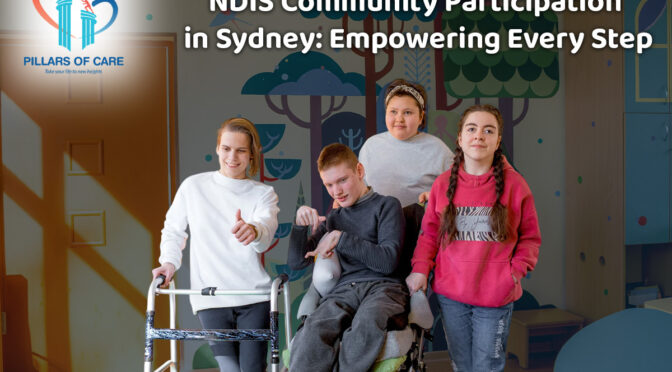
NDIS Community Participation in Sydney: Empowering Every Step

At Pillars of Care, we understand that real well-being goes beyond just medical support—it’s about being part of a community. That’s why our NDIS Community Participation services in Sydney are designed to help participants stay connected, active, and engaged in life outside their homes.

What Is Community Participation Under NDIS?

NDIS (National Disability Insurance Scheme) has multiple types of support services for all the participants residing in Australia. Community participation is one of the most popular among them. It generally deals with creating a healthy community where every individual finds comfort and independence. Some of the examples of community participation are:

  • Joining a local group,
  • Attending a class, 
  • Simply going out for a coffee with a companion, 

Why Community Access Matters

We believe that emotional support is essential in boosting mental health. Think of it this way—you are sitting at home. What will happen? 

Boredom, depression, anxiety, and loneliness. On the other hand, if you have community access, you can learn some skills, catch up with friends, and even go out for entertainment. 

This is where it makes a difference. Community Access services in Sydney at large have helped many NDIS participants—empowering and strengthening lifestyles. 

From accompanying you to your local library, cultural events, and sports centres to helping you attend personal appointments—our team is here to make community access stress-free and meaningful.

Tailored Community Participation Sydney Services

Our approach is flexible and centred around you. When you choose Pillars of Care for Community Participation in Sydney, you get:

  • Friendly, trained support workers
  • Activities matched to your goals and interests
  • Safe, respectful, and empowering environments
  • A chance to build new friendships and social skills

Whether you prefer solo outings or group settings, our services are tailored to fit your lifestyle.

Step into a more connected life today.

Contact Pillars of Care to learn more about our NDIS Community Participation and Community Access services in Sydney.

Even Adults are Suffering From Autism

What is Autism? 

In the past, Autism was usually associated with children and individuals who were below 12 years old.  However, Autism has increased in young adults, precisely in the age group of 20- 30.  In a nutshell, Autism Spectrum Disorder (ASD) is a lifelong disorder that impacts how an individual interacts and how an individual behaves with the puter world.  In recent years, Disability Support Services Gold Coast has made significant efforts in addressing the issue of Autism through prominent companies like Pillar of Care. 

Symptoms of Autism 

Getting the right Disability Care Gold Coast at the right time is crucial for children and adults as well. Identifying the ailment and connecting with Pillars of Care can reduce the severity to a great extent. 

 Some of the common symptoms in children are:

  • Avoiding eye contact and close interaction 
  • Intensely showing interest in a particular type of topic. 
  • Highly sensitive to physical touch, loud sound, and smell.
  • Hard to insert into a new routine 
  • Not giving enough attention when someone is calling or pointing

. Some of the common symptoms in Adults are:

  • Unable to express oneself
  • Disturb when there is a change in the default routine
  • Not socializing and keeping a distance 
  • Avoiding social interaction and unable to make meaningful relationships. 
  • Being serious and taking all kinds of scams literally. 

If your child or any adult around you has some of these symptoms, it’s the right time to get connected with  Pillar of Care and obtain the ideal Disability Care Gold Coast. Remember, prevention is better than a cure. Get connected as soon as possible and let the professional explain to you. It may happen that you’re just overthinking, and there is no issue at all. 

How to get the best  Disability Support Services Gold Coast for Autism?

Steps that need to be followed in order to get top-tier Disability Support Services Gold Coast for Autism are:

Identifying the purpose 

  • Austism is a broader term and includes many sub-disorders. Carefully examine yourself or your child and find out what service you need. It is therapy or assistance in social interaction. 

Looking for an NDIS-approved provider 

  • Connect with companies like  Pillar of Care as they are verified by NDIS and adhere to all legal and social formalities.

Evaluating the capacity 

  • Check whether the company has qualified professionals and an easy-to-access environment. 

Service to consider

  •  Ensure that the  Disability Care Gold Coast includes skill-building, emotional well-being, and self-fulfillment activities. 

Past customers and testimonials

  • Check the website and other digital platforms to gain insight about the review and service quality. 

Accesbility and felcibity 

  • An ideal provider provides 24*7 and instant service as Pillars of Care.  Get your condition improved immediately: https://pillarsofcare.com.au/ 

Conclusion 

Autism in adults is an alarming thing as it impacts day-to-day productivity. Get your healing process with Pillars of Care at affordable prices from the solace of your home. 

Don’t ignore the symptom so that it becomes a major issue, leaving you behind in life. 

Empowering Lives with Quality Support: NDIS Services Gold Coast

Trusted Care with Pillars of Care – Your Local NDIS Provider Gold Coast

Getting an adequate understanding of the National Disability Insurance Scheme is essential in order to get the best plans that suit your goals and medical condition. An efficient NDIS provider can do wonders and significantly transform your life within a short period. To navigate this good cause, Pillar of Care – a prominent NDIS Services Gold Coast is equipped with multiple solutions, along with NDIS approval. 

Why NDIS is Important

NDIS  provides a range of services that uplift individuals’ lives and act as a support system in their medical journey. 

On-time and result-oriented support from a trusted NDIS Provider Gold Coast can considerably help participants in achieving their goals and living with utmost freedom. 

What Makes Pillars of Care Stand Out

Pillars of Care is a dedicated and professional NDIS Provider Gold Coast that believes in person-centred support. Here’s what makes them a reliable choice:

Pillar of Care has maintained its integrity as one of the top NDIS Providers Gold Coast and adheres to a customer-centric approach. Some of the reasons that make the company reliable are: 

  • Customized care: Services are tailored to get along with customer needs.
  •  Well-trained professional and familiar behaviour:  Easy-to-communicate environment and expert guidance. 
  • Flexible solution and diversity: Whether at home or in the community, assistance is delivered when and where needed.
  • Strong community connections: The team helps clients access local activities and opportunities.

Visit pillarsofcare.com.au to learn more about their services.

Choosing the Right NDIS Provider Gold Coast

Dealing with a disability is no doubt a hard task. What makes it more complicated is getting help from companies that have less experience and knowledge in this field. Pillar of Care has been appreciated by the people as it understands, accesses, and offers the best solution. High pricing, lengthy paperwork, and delayed treatment are skillfully navigated in Pillar of Care. 

Here are a few reasons to choose them:

  • Clear and straightforward communication 
  • Respecting cultural norms and aligning with them.
  • 24/7 availability for essential services
  • Excellent management and modern approach 

Elevate your experience and embark on your precious journey with the best NDIS Provider Gold Coast.

Get In Touch 

Want reliable and affordable NDIS Services Gold Coast? Connect with Pillars of Care right now.